
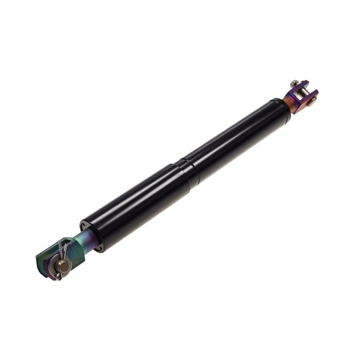
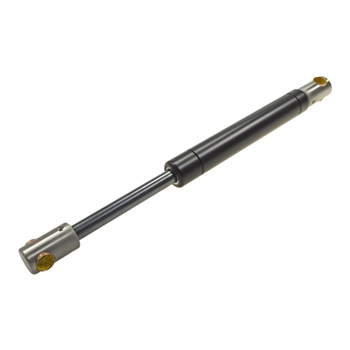
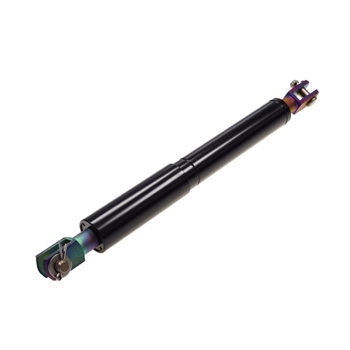
Gas Springs

No articles found

Topseller in dieser Kategorie

Gas springs for trucks, commercial vehicles and tail lifts – controlled force assistance when opening and closing

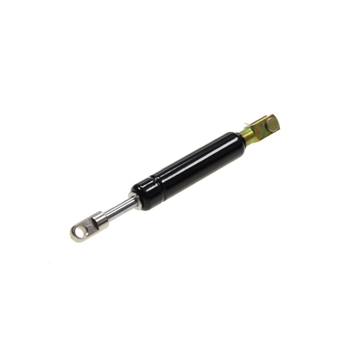
Gas springs are compact components that noticeably facilitate the opening and closing of heavy flaps, hoods and platforms on commercial vehicles. They convert the nitrogen pressure stored inside into a continuous lifting force, dampen movements and reliably hold components in their end position. In this category you will find gas springs for general applications on the truck – such as for tool boxes, storage compartments, hoods and doors – as well as variants specifically designed for use on the tail lift, for example at the rear portal or on underrun-design platforms. At SULEJ Ladebordwand, decades of experience in maintenance and repair flow directly into the selection of these components – for uniform force assistance, reliable end-position support and low-wear operation over many load cycles.

Function and area of application on commercial vehicles

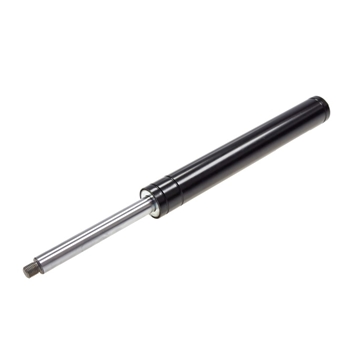
A gas spring consists of a closed cylinder in which nitrogen is under pressure. A piston rod with a sealing system separates the pressure chamber and transmits the force to the outside. When the rod extends, the gas performs controlled lifting work; when it is pushed in, the pressure is taken up again. On the truck, gas springs are used in many places: cab attachments, hoods, tool boxes, storage compartments and rear flaps. In the tail lift environment, they perform a safety-relevant function at the rear portal and on underrun-design platforms, whose flaps, tips or protective covers can hardly be moved safely without force assistance.

Designs, characteristic values and versions

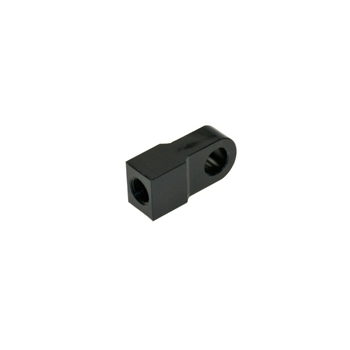
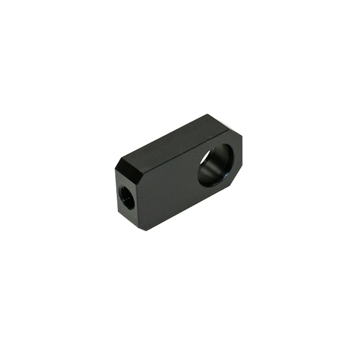
Gas springs are described by various characteristic values – extension force in Newton, stroke length, overall length and design of the end fittings. Common are standard gas pressure springs, lockable versions with release pin and special designs with end-of-stroke damping. Ball sockets, fork heads, eyes or threaded ends are used for the connection, supplemented by matching rod-end connections and fastening elements.

The cylinders are generally made of powder-coated or galvanised steel; stainless steel versions are preferred in applications with high corrosion exposure. The piston rods are usually hard-chrome plated to protect the seals from wear and ensure smooth operation over the entire service life. Protective sleeves or bellows prevent the ingress of dirt and road salt, especially with installation positions below the vehicle body.

Wear, pressure loss and typical inspection points

Even high-quality gas springs slowly lose pressure over time. Micro-movements at the piston rod, UV radiation, temperature fluctuations and mechanical abrasion permanently stress the sealing system. Typical signs of decreasing function are weakening lifting assistance, self-lowering of loaded flaps, visible oil traces on the rod or noises at the end of the stroke. Regular visual inspection as part of maintenance on the truck identifies these weak points at an early stage, before safety-relevant consequential damage occurs.

Selection and replacement as spare parts

When selecting a gas spring, extension force, stroke length, overall length, end fittings and installation position are decisive. Ideally, gas springs are replaced in pairs so that the force assistance acts evenly on both sides. The installation direction is important: as a rule, the piston rod points downwards to protect the seals from dust and dirt. For tail lift applications, defined connection dimensions and matching rod-end adapters must additionally be observed.

In the range of SULEJ Ladebordwand you will find gas springs for common commercial vehicle applications and tail lift systems. Worldwide delivery ensures fast availability for workshop, fleet and mobile service operations.

Advantages at a glance

  • Controlled lifting assistance when opening heavy flaps and hoods
  • Reliable end-position support without mechanical locking
  • Low-wear design with hard-chrome plated piston rod
  • Corrosion-protected cylinders for permanent outdoor use
  • Versatile connection variants for truck, commercial vehicle and tail lift applications

The gas springs offered in this category are designed for use on trucks and commercial vehicles and allow quick selection of suitable components for maintenance, repair and replacement. As a tail lift specialist, SULEJ Ladebordwand offers these components as tested spare parts for commercial use.

Frequently asked questions about gas springs for trucks and tail lifts (FAQ)

How does a gas spring work?

Nitrogen is under pressure inside the gas spring. When the piston rod extends, the gas performs controlled lifting work; when it is pushed in, the pressure is taken up again. This produces uniform force assistance.

Where are gas springs used on the tail lift?

Common installation locations are the rear portal, flaps on underrun-design platforms and protective covers, whose safe movement would hardly be possible without force assistance.

How do I recognise a defective gas spring?

Typical signs are weakening lifting assistance, self-lowering of loaded flaps, visible oil traces on the rod or noises at the end of the stroke. In such cases, replacement is required.

Should gas springs always be replaced in pairs?

Yes, if the flap or hood is supported on both sides. Only a pairwise replacement ensures uniform force assistance and protects the component against distortion.

Need assistance or spare parts?

Trust SULEJ Ladebordwand – we combine high-quality original parts with excellent service and a genuine passion for technology.

Contact us now