
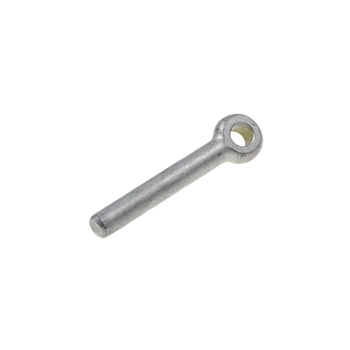
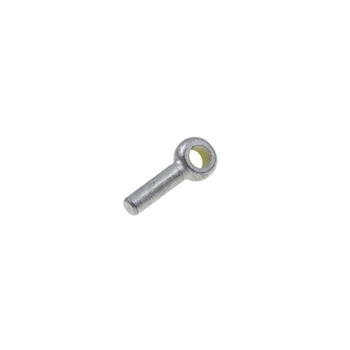
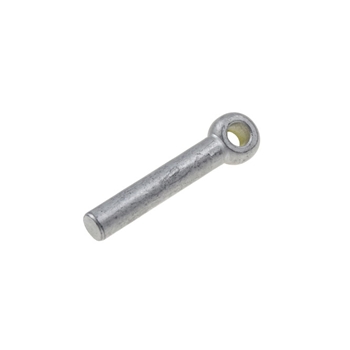
Eye Pins

Topseller in dieser Kategorie

Eye Pins for Tail Gates and Lift Gates – Central Connection Elements in the Lifting System

Eye pins are universal connection elements in mechanical engineering and perform key functions on tail gates in particular. In this category you will find eye pins designed for use on tail gates and lift gates, where they serve as mechanical pivot and bearing points. They connect moving components and ensure that lifting arms, hydraulic cylinders and platforms can move in a controlled, stable and safe manner. Despite their compact design, they have a decisive influence on function, operational safety and the service life of the entire construction. Precisely manufactured and correctly installed eye pins form the mechanical connection points for force-transmitting and moving joint connections.

Function and Application of Eye Pins on the Tail Gate

On a tail gate, eye pins are used at numerous highly loaded points. They connect hydraulic cylinders to lifting arms, secure moving components to the main frame and serve as pivot points for folding or swivelling platforms. In these joint connections, they must absorb both static loads and dynamic forces that occur during lifting, lowering and closing. At the same time, they enable smooth, low-play movement and thus contribute to stable and controlled operation of the lift gate. Even slight play or wear can lead to uneven movement sequences, increased material stress and consequential damage to adjacent components.

Designs, Materials and Securing Systems of Eye Pins

Eye pins are technically far more than simple bolts. They are manufactured in different designs to meet the structural requirements of various systems. High-strength steel is standard, as it provides the necessary mechanical properties for continuous loads. Galvanised or coated surfaces additionally protect against corrosion caused by moisture, road salt and changing weather conditions in daily use.

Designs, Materials and Securing Systems of Eye Pins

Depending on the design, eye pins are used with or without a collar. A collar serves as an axial stop and ensures defined positioning. Versions with threads allow secure fastening, while smooth variants are used with external securing elements. Proper securing is essential: holes for split pins, retaining rings or locking clips prevent unintentional loosening due to vibrations or changing loads and are crucial for operational safety.

Wear, Maintenance and Repair of Eye Pins

Eye pins are typical wear parts on tail gates and lift gates. Due to constant movement and high loads, both the pin itself and the associated bearing points wear over time. Typical signs include increased play, rattling noises under load, uneven movements or visible wear and corrosion.

Quality as a Safety Factor for Eye Pins

As part of regular maintenance, eye pins should therefore be checked consistently. Adequate lubrication reduces friction, minimises wear and protects against moisture. If a bearing point is already worn, replacing the eye pin alone is often not sufficient – additional bushings must be renewed to restore the original fit and ensure long-term function. With safety-relevant components such as eye pins, compromises are not an option. Inaccurate manufacturing, unsuitable materials or insufficient corrosion protection lead to premature wear, consequential damage to adjacent components and, in the worst case, safety-critical situations. High-quality eye pins are characterised by precise dimensional accuracy, tested material quality and durable surfaces. They ensure reliable force transmission and smooth movement throughout the entire lifting system. The eye pins offered in this category are designed for use on common tail gates and lift gates and allow quick selection of suitable spare parts for maintenance and repair. At SULEJ Ladebordwand, the focus is on precisely fitting spare parts that meet the high demands of daily operation.

Frequently Asked Questions About Eye Pins on Tail Gates and Lift Gates (FAQ)

How can I recognise a worn eye pin?

Typical signs include play in the joint connection, noises under load as well as visible wear, grooves or deformation. In such cases, the eye pin should be checked and replaced.

Why is precise fit so important for eye pins?

Only a precisely fitting eye pin distributes forces evenly across the bearing point. Deviations lead to increased wear, unstable movements and possible consequential damage.

Which securing method should be used?

Depending on the design, split pins, retaining rings or locking clips are used. The respective design should always comply with the technical specifications to ensure operational safety.

Is replacing the eye pin alone always sufficient?

Not always. If the bearing point is already worn, bushings or adjacent components should also be checked and replaced if necessary to restore the original fit.

Need Support or Spare Parts?

Rely on SULEJ Ladebordwand – we combine high-quality original parts with excellent service and genuine passion for technology.

Contact